
Reducing cognitive load by transitioning from nested menus to a scalable hub framework.
.png)

Navigate to:
Navigation restructuring for a pre-release mobile product.
Following a strategic pivot, the legacy "Phone" navigation became a critical bottleneck. It prioritized immersion over usability, failing to support the game's new core loop.
Before diving into the process, here is what this redesign achieved for the Soft Launch:
Mapping the legacy architecture revealed a fragile system unable to support the game's expanding scope:
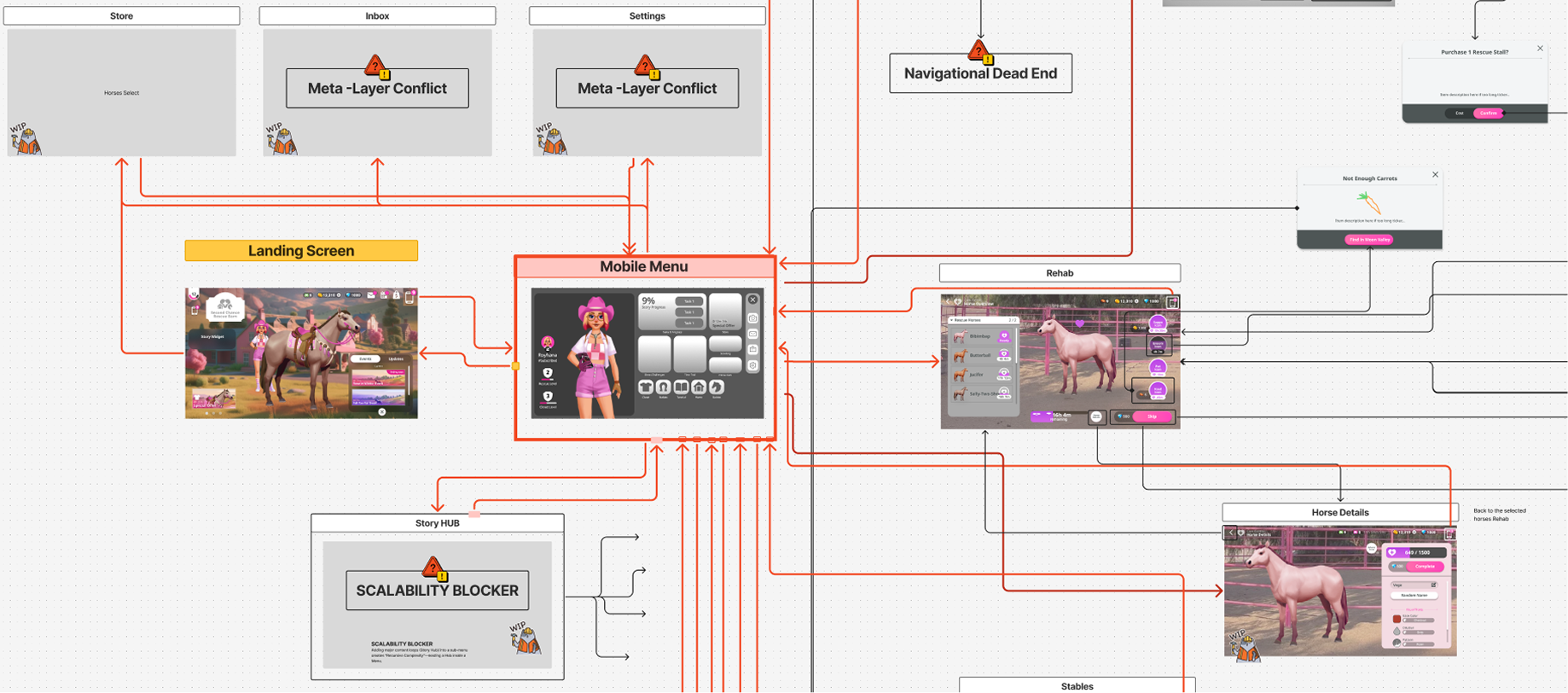
The audit revealed that core gameplay loops were buried behind 4+ taps. Inconsistent "Back" button behavior frequently trapped users in deep sub-menus, creating logic dea
Forcing players to open a nested "phone" menu for every interaction created a jarring modal interrupt. This deviated from standard mobile game patterns, introducing unnecessary friction and risk for a pre-launch title.
The "Phone" The "Phone" metaphor suffered from functional overload. Disparate tasks, like starting a physical race or changing system settings were forced into the same narrow context. This "orphaned" key features, as users did not expect to find global settings inside a diegetic character item.
After ideating and feedback, I had narrowed down to two primary directions to present to the product manager and team:
Primary navigation points live directly on the HUD. However, technical constraints prevented 'Deep Linking' or lateral tabs between screens. This created a 'Pogo-Stick' effect: users were forced to return to the HUD for every task switch, doubling the interaction cost.
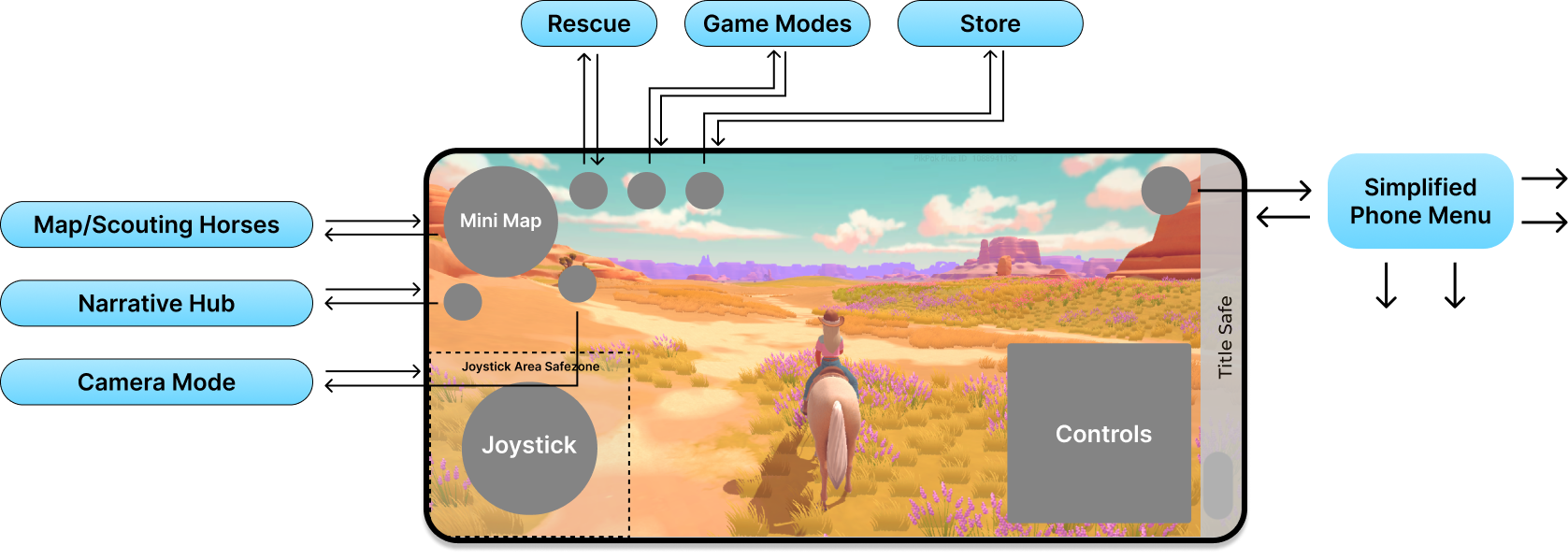


Adopts an industry-standard Hub model to minimize onboarding friction.
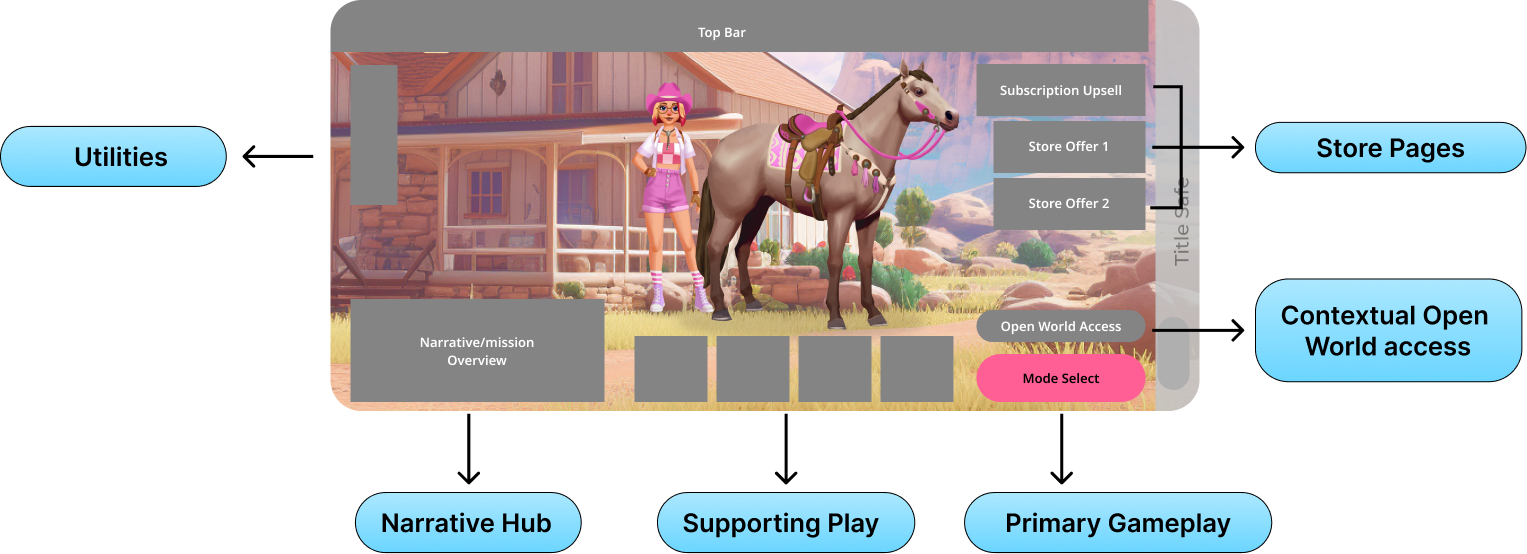
We selected this direction to prioritize clarity over immersion. Testing confirmed this decision, achieving a 100% navigation success rate in subsequent user tests compared to the confusion of the legacy model.
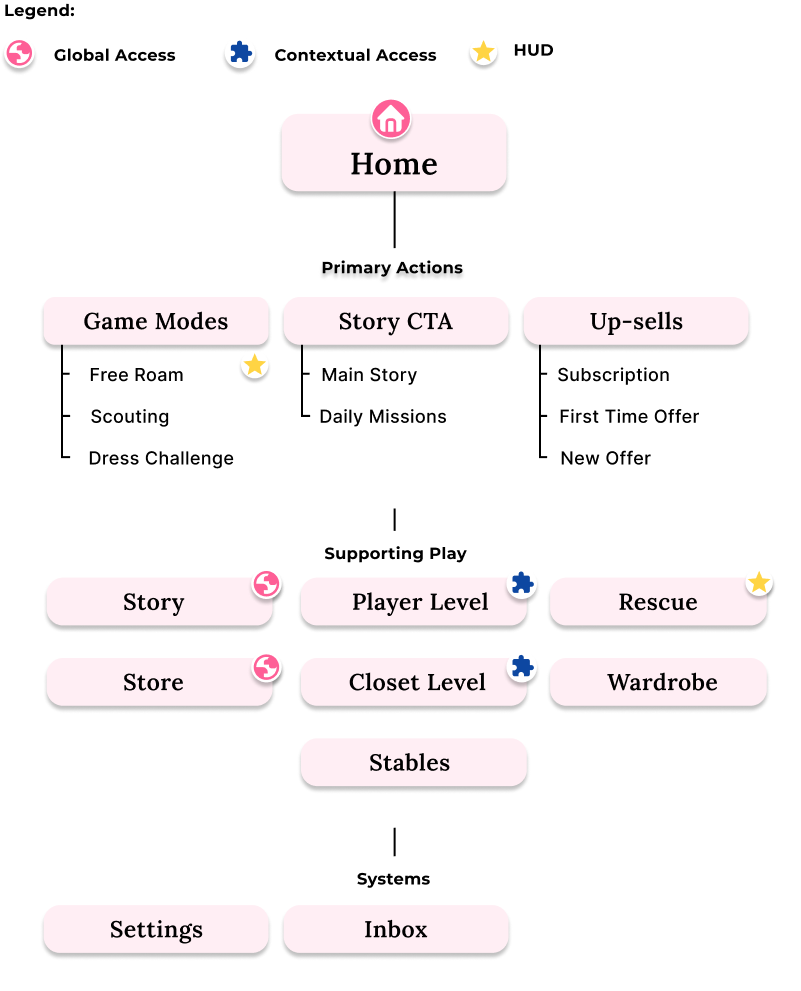
A Tiered Hub & Spoke Framework. To solve the 'Pogo-Stick' navigation issue, I developed a three-tier architecture that balances player immersion with critical business drivers.
The following maps illustrate the structural hierarchy (left) and the resulting Top Bar UI logic (right).
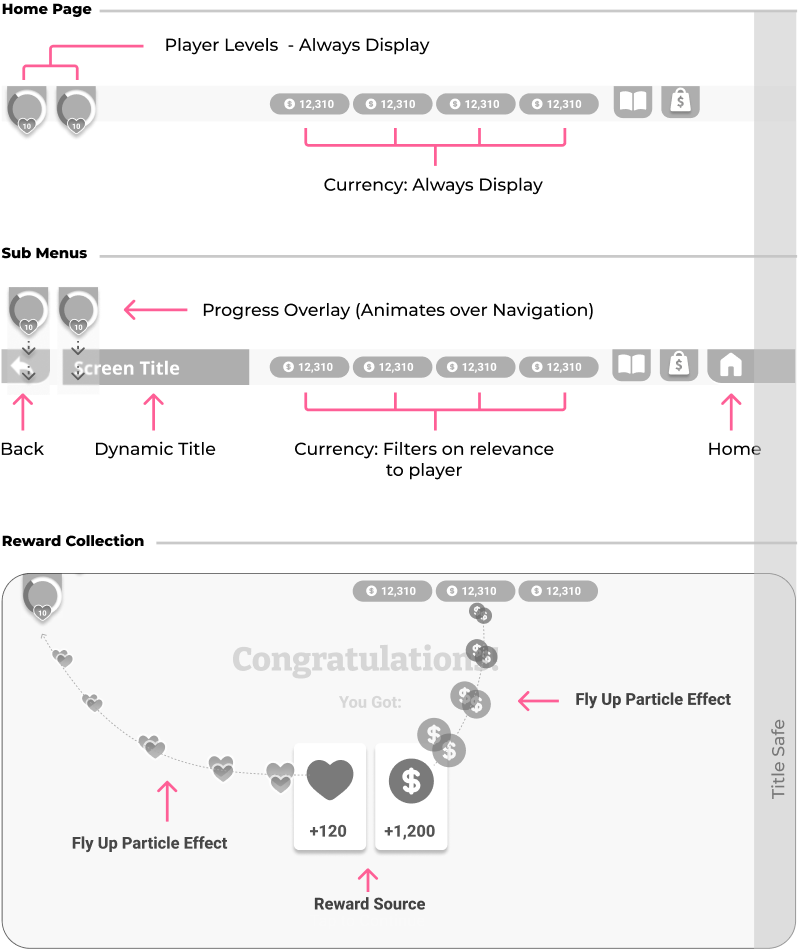
In a feature-rich live service game, 'Alert Fatigue' is a major risk. If everything screams for attention, the player sees nothing. To manage cognitive load, I designed a dual layer notification system based on urgency and permanence:
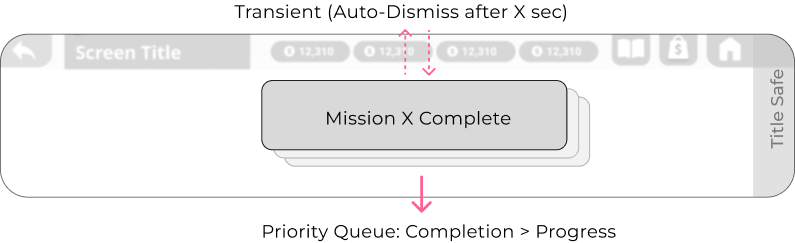
Transient, high-motion alerts reserved for immediate gratification (Level Ups, Mission Completes). These operate on a strict priority queue. completion events always override incremental progress.
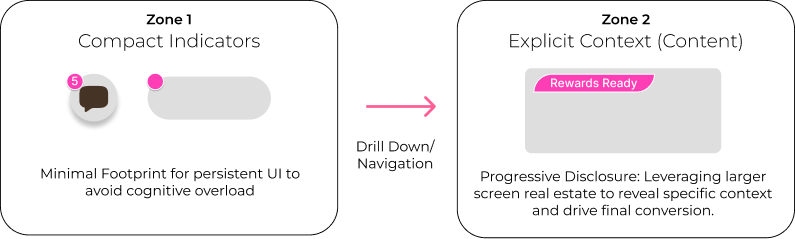
Persistent, static anchors for deferred actions. We utilized a 'Progressive Disclosure' model: simple dots at the top level to reduce noise, revealing specific counts (numbers) only as the player navigates deeper into the menu structure.

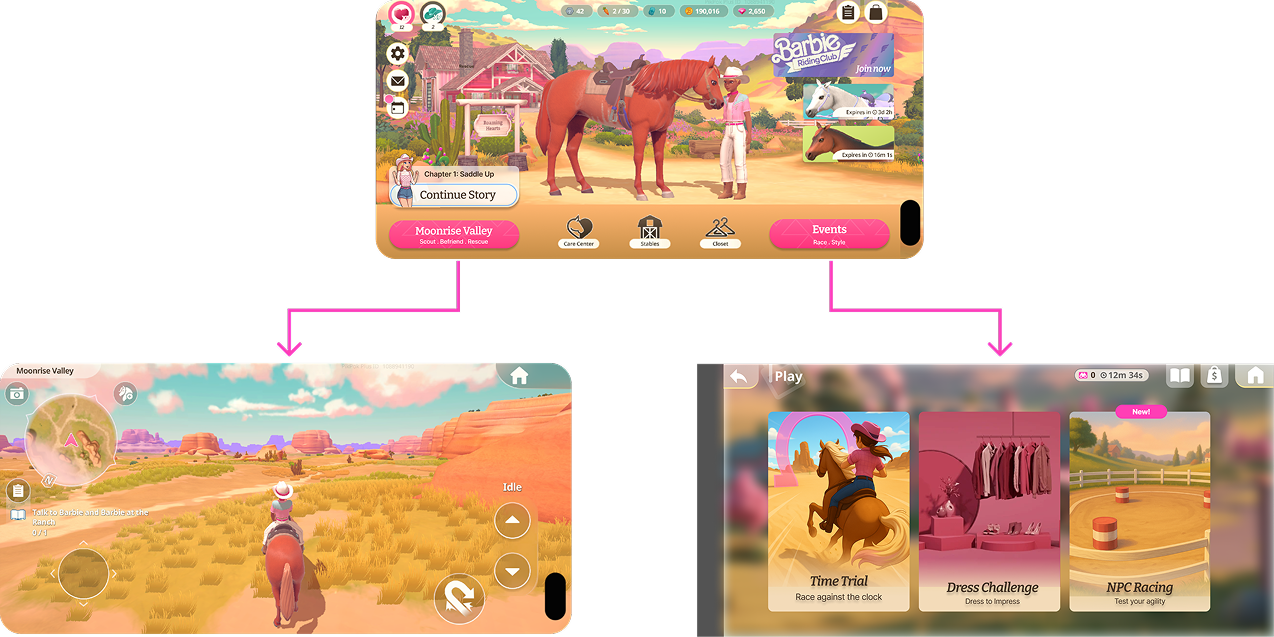
Post-launch player feedback highlighted a mental model conflict within the "Play" menu. Currently, Structured Gameplay (Races) and Unstructured Exploration (Free Roam) are grouped together, which contradicts our onboarding.
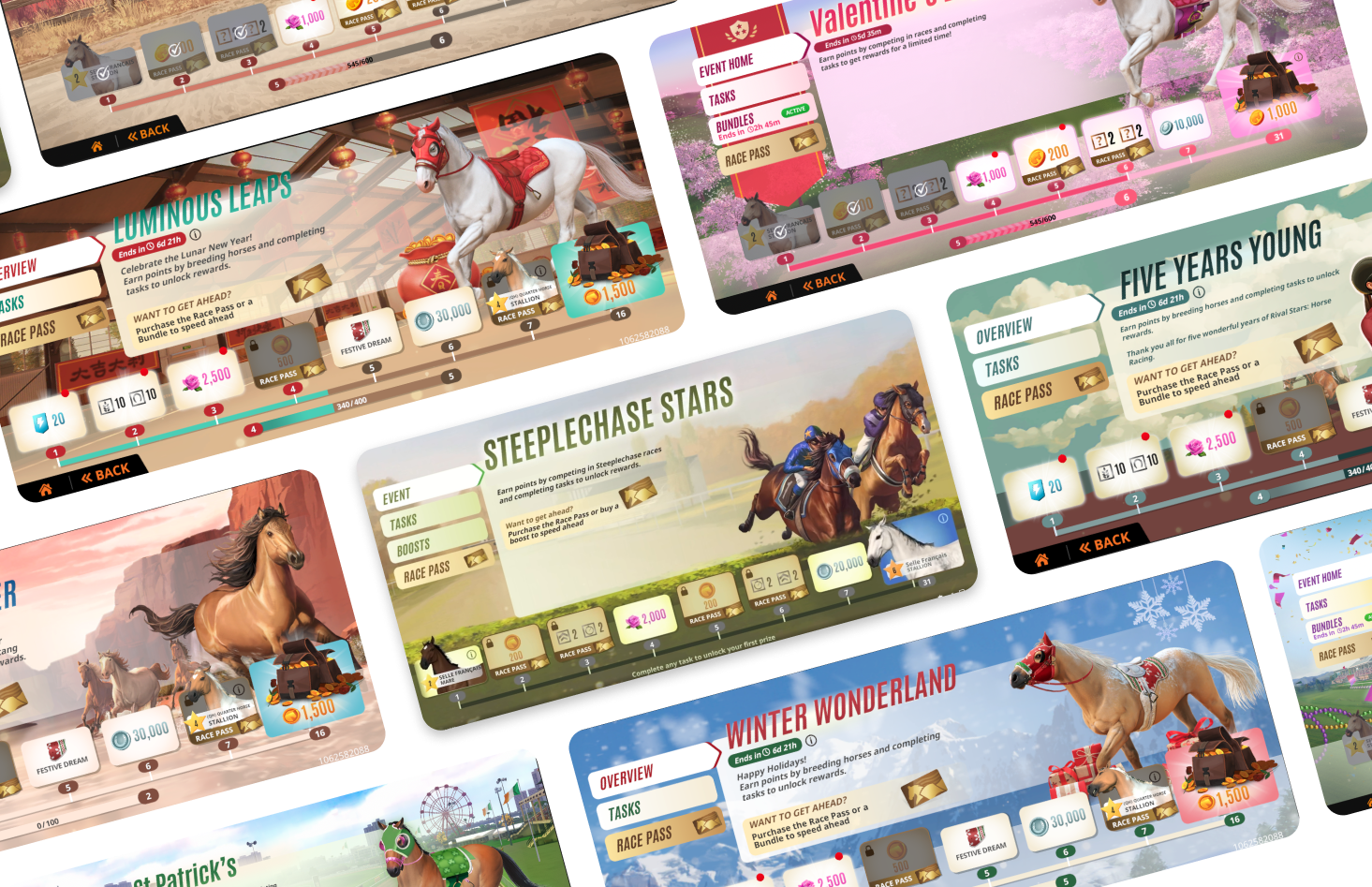
Elevating Player Engagement and Revenue in Rival Stars Horse Racing Through Strategic Event Design

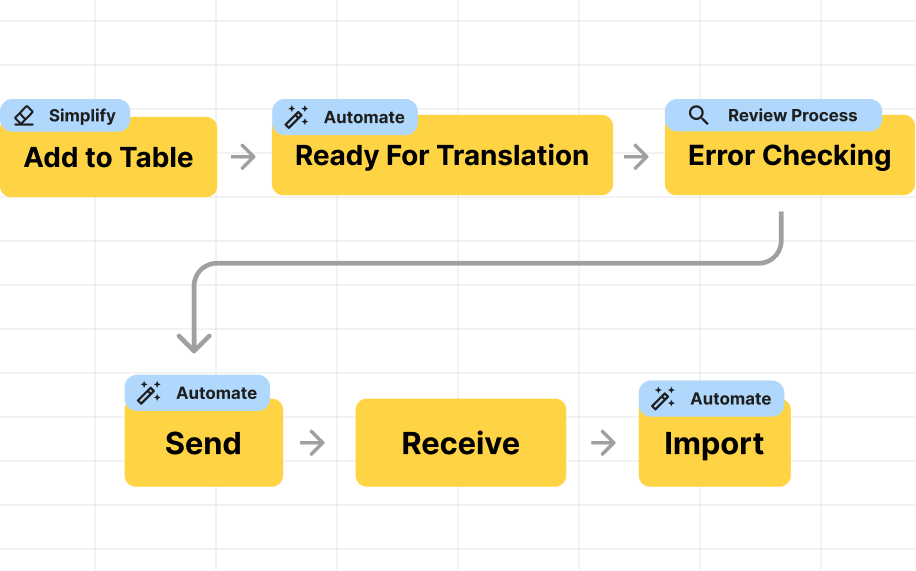
Creating scalable solutions for translation management
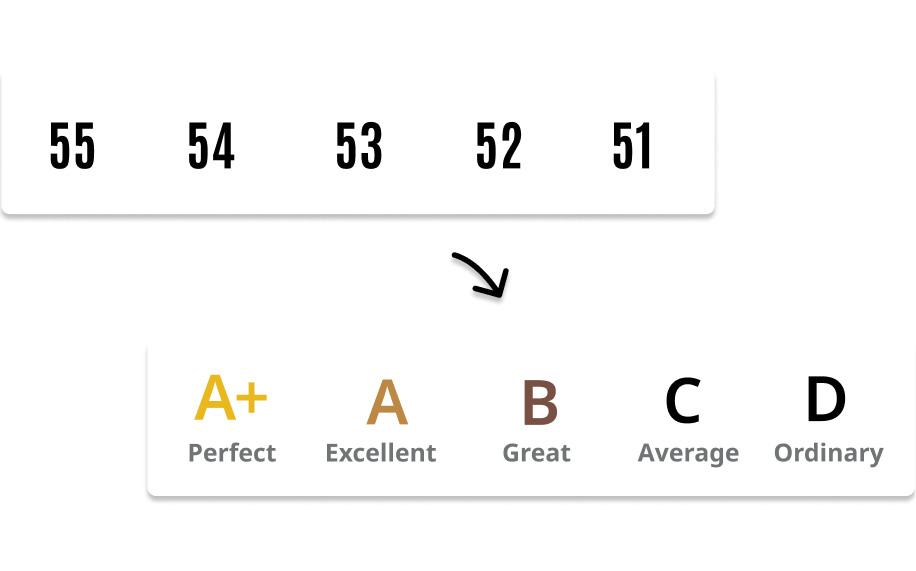
Improving user understanding with a transparent, color-coded grading system
.png)

